The Oryx-AI Method: Solving AI Distraction in Software Engineering
IT
•
February 22, 2026
•
50 Views
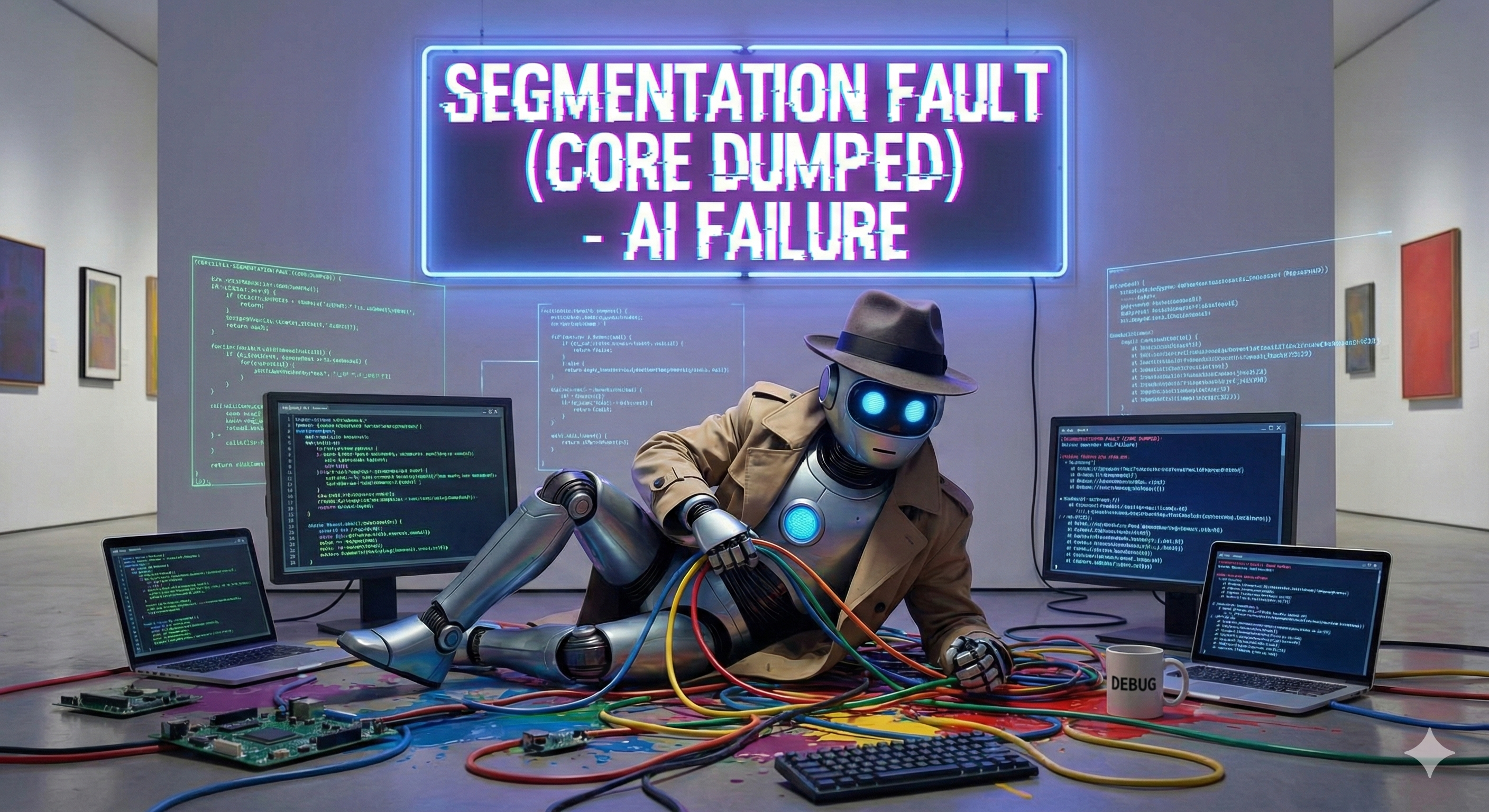
If you have spent any serious amount of time building software with Artificial Intelligence, you know the honeymoon phase rarely lasts. You start a new project, the AI writes brilliant boilerplate code, and everything feels like magic. But then, as the project grows in complexity, the magic abruptly fades. The AI starts forgetting your early instructions. It overwrites critical files, simplifies complex logic for no reason, and eventually breaks the very application it just spent hours helping you build.
I completed my Master of Science in Information Systems (MSIS) degree in August 2025. Throughout my studies, my professional work, and the development of my own tech companies, I have worked extensively with almost every major AI model and coding assistant on the market. I’ve built with ChatGPT, GROK, most of the OLLAMA local models, Deepseek, GitHub CoPilot, Claude, Replit, and Lovable.
Despite their vastly different underlying architectures, training data sets, and marketing pitches, I realized a hard truth: they all suffer from the exact same fatal flaw. Whether you are utilizing a massive cloud-based model or a specialized local agent, they all inevitably experience "Contextual Drift."
I developed The Oryx-AI Method to solve this exact problem. By treating the AI not as an infallible, omniscient brain, but as a brilliant yet easily distracted worker, we can build massive, reliable systems without losing our minds or our code.
The Universal Flaw: The "ADHD" Problem of AI
To understand the solution, we first have to deeply understand why models like Claude, CoPilot, and Deepseek fail in long, continuous conversations.
AI agents do not actually "forget" things the way humans do; their attention just gets stretched too thin. When you ask an AI to build a complex, multi-step program, it operates within a fixed memory space called a context window. Every prompt you type, every line of code it generates, and every error message you paste back to it consumes tokens within this window.
Once that memory window is full, the AI is forced into a corner. It starts prioritizing your most recent messages over the foundational rules you established at the very beginning of the project. This is Contextual Drift, often referred to by researchers as the "Lost in the Middle" phenomenon. The model gets completely lost in the granular weeds of the current conversation.
Imagine you are 90% done with a complex web application. You prompt the AI to make a simple aesthetic change: "Make the primary call-to-action button dark mode compatible." The AI happily obliges and provides the updated CSS and HTML. However, because the overarching system architecture fell out of its immediate context window ten prompts ago, it silently deletes the crucial database connection logic attached to that button.
When the AI loses sight of the big picture, it tries to guess. It writes code that looks syntactically perfect but fundamentally severs the dependencies in the rest of your app. This is why, towards the end of long build on platforms like Replit or Lovable, developers end up spending three times as long fixing the AI's hallucinations as they did writing the new features. The AI simply cannot hold the entire, evolving project state in its active, working memory.
The Illusion of Infinite Memory: Why the Giants Fail
The current industry standard for solving this problem is simply throwing more context at the AI. Tech giants boast about massive context windows hundreds of thousands, or even millions, of tokens. But having a massive desk doesn't mean you can instantly find the one piece of paper you need.
Tools like CoPilot or integrated IDE assistants often rely on passive Retrieval-Augmented Generation (RAG). They attempt to automatically guess which files in your directory are relevant to your current prompt based on semantic similarity. If you ask about a "user profile," the AI pulls up profile.html. But what if the bug is actually located in a deeply nested authentication middleware script? The AI doesn't pull it, doesn't see it, and proceeds to hallucinate a fix that breaks the application further.
Furthermore, they allow the AI to push code directly to the file system without an active compliance or architectural audit. When an AI hits a roadblock late in a project, it often resorts to "simplification." It will take a beautifully orchestrated, 200-line function handling edge cases and error logging, and overwrite it with a generic 20-line script that it pulled from its base training data. You don't realize it until you deploy to production and the app crashes.
The Solution: The Oryx-AI Method
The Oryx-AI Method works because it aggressively forces the AI to stop relying on its own messy, fluid chat memory.
Picture an Oryx resilient antelope built to survive and navigate in harsh, unforgiving environments where lesser animals perish. The Oryx’s defining feature is its long, straight horns that guide its path. This method relies on a similar three part anatomical structure:
The Head (The Key Output): This is the actual code, the new features, and the active generation the AI is producing. It is the forward momentum of your project.
Point 1 / Horn 1 (The Backup Anchor): One horn represents the absolute ground truth. This is a complete, up-to-date .txt backup of your entire project log, including all codebase states, that the AI must ingest before it writes a single new line of code.
Point 2 / Horn 2 (The Recap Validation): The second horn is the active validation loop. Every few steps, the AI must pause its generation, recap exactly what it just did, and check those actions against the Point 1 Backup to ensure it hasn't drifted.
By strictly utilizing these two points of reference, the "head" is physically incapable of turning in the wrong direction. We anchor the AI to a hard, undeniable state, rather than a conversational memory.
Real World Motivation: From Manual Execution to Mastery
Before conceptualizing how to hard-code this into an automated IDE, I tested the Oryx-AI Method manually. I forced myself to stop the AI, generate a full text log of my codebase, feed it back into the prompt, and ask the AI to recap its directives before proceeding. The results were staggering. By managing the context manually, I was able to bypass the limitations of modern LLMs and build incredibly complex, production-ready systems that would have otherwise collapsed under their own weight.
Scenario 1: https://MindTheDesk.com
Building an application like https://MindTheDesk.com requires handling intricate, multi-layered data flows. You are dealing with user sessions, complex logic for deal tracking, and dynamic database routing. When I initially attempted to build similar structures relying purely on standard AI conversational memory, the model would inevitably forget the database schema halfway through building the frontend dashboard. It would start inventing variable names that didn't exist in my SQL tables.
By applying the Oryx-AI method, I forced the AI to look at the .txt backup of the database schema every single time we shifted focus to a new component. I made it recap the data flow: "Before we build this dashboard, confirm you understand how the deal ID maps to the user profile in the schema." The AI stayed locked in. It wrote flawless relational logic because it was never given the opportunity to guess.
Scenario 2: AustinPlatinumClean.com
Service businesses require rock-solid reliability. For AustinPlatinumClean.com, the system needed a dark-mode compatible index, customer editing/deletion capabilities, manual line item invoicing, and a mass communication portal capable of routing texts and emails.
If you let an AI loose on an invoicing and mass-communication system without guardrails, a hallucination isn't just a visual bug it's a financial liability. The AI might accidentally overwrite the text routing logic while trying to fix a CSS issue on the dark mode toggle. Using the Oryx-AI two-point reference, I separated the concerns. Before touching the mass communication scripts, the AI had to ingest the current state of the customer database and recap the invoicing logic. Because the AI was constantly re-anchored to the true state of the application, I was able to orchestrate a secure, multi-functional business portal seamlessly.
Scenario 3: Pyblox Final "Stages of development" (Code-to-Cloud Orchestration)
The ultimate test of this method was updating the core architecture of Pyblox itself, specifically the code-to-cloud deployment logic. Infrastructure as Code (IaC) and containerization are unforgiving. If an AI forgets a single environmental variable in a Dockerfile or misaligns a port mapping in a docker-compose.yml because it got distracted by a Python script, the entire cloud deployment fails.
By enforcing the Recap and Backup method, the AI was never allowed to touch the Docker environment without first cross referencing the fully updated Python backend log. It had to validate: "I am exposing port 8080 because the updated backend backup confirms the Flask server is running there." The Oryx-AI method allowed me to build an incredibly robust, automated code-to-cloud pipeline that simply does not break.
The Multi-Agent Architecture: Automating the Method
While the manual approach proves the theory, the ultimate goal is to automate this within an Agentic IDE. To make the Oryx-AI Method work natively, we have to split the AI's workload. You cannot have the same "brain" writing the code and checking the rules simultaneously once a project scales. We divide the system into two distinct roles:
1. The Worker (The Coder)
This AI does the heavy lifting. It writes the Python scripts, updates the database, and builds the UI. However, under this method, the Worker has absolutely zero authority to save anything on its own. It is a pure generator. It exists in a state of constant execution but has no administrative power over the file system.
2. The Supervisor (The Sentinel)
This AI doesn't write a single line of functional code. Its only job is to watch the Worker, hold onto the Point 1 Backup, and enforce the Point 2 Recap. It acts as the ultimate project manager, ensuring that the Worker's output actually aligns with the business goals, industry standards, and the actual state of the codebase.
The "Rule of 5" Heartbeat
If you let an autonomous agent run for too long, it drifts. To prevent this, the Supervisor enforces a strict "Rule of 5" to keep the Worker grounded. This acts as the heartbeat of the system.
The Hard Stop: After exactly 5 agentic moves (or user conversational turns), the whole system locks. The Worker is paused.
The Check-In (Point 2): The Supervisor asks the human developer a direct, context-aware question based on the recent changes. For example: "The Worker just restructured the database to accommodate the new user login feature. Does this still align with the security requirements of our system?"
The State Sync (Point 1): Once the developer validates the changes, the Supervisor updates the .txt backup to reflect the newly written code. It clears the Worker AI's distracted conversational memory, feeds it the fresh backup, and lets it start the next 5 moves with perfect, 100% accurate perspective.
The Execution Gatekeeper: update.py
A major reason AI projects unravel is that the AI attempts to edit files randomly across your directory. It might update a frontend component but forget to update the backend route that serves it. Under the Oryx-AI Method, we eliminate this vulnerability by using a strict, unyielding gatekeeper.
The Worker AI is never allowed to edit a file directly. Instead, every single change whether it is a database migration, an HTML tweak, or a Docker update must be passed as a set of structured instructions to a central script named update.py.
update.py is the executioner. It takes the code that has been validated by the Recap and approved by the Supervisor, and safely applies it to the codebase in a single, atomic action. If something goes wrong during execution, a syntax error causes a crash. We know exactly where it happened. The script aborts, and the project remains safely at the last clean Point 1 Backup. This completely eliminates the "phantom deletions" and catastrophic overwrites that plague systems like ChatGPT and Replit.
Conclusion: The Path Forward
We must fundamentally change how we interact with Large Language Models in software engineering. We need to stop treating them like omniscient magic brains that remember everything perfectly. The foundational architecture of these models guarantees that they will eventually lose focus, prioritize the wrong tokens, and hallucinate when pushed to their limits in a long context window.
By acknowledging this limitation and building a rigid governance layer around it, we can unlock the true, massive potential of AI pair programming. The Oryx-AI Method focusing strictly on the Key Output while relying relentlessly on the hard-state Backup and the 5 turn Recap eliminates the frustrating, costly meltdowns of modern AI coding. It replaces chaos with predictability. It is the framework that will allow developers to confidently construct massive, reliable, and secure software systems long into the future.
Author: Ryan S. Taylor, MSIS
I completed my Master of Science in Information Systems (MSIS) degree in August 2025. Throughout my studies, my professional work, and the development of my own tech companies, I have worked extensively with almost every major AI model and coding assistant on the market. I’ve built with ChatGPT, GROK, most of the OLLAMA local models, Deepseek, GitHub CoPilot, Claude, Replit, and Lovable.
Despite their vastly different underlying architectures, training data sets, and marketing pitches, I realized a hard truth: they all suffer from the exact same fatal flaw. Whether you are utilizing a massive cloud-based model or a specialized local agent, they all inevitably experience "Contextual Drift."
I developed The Oryx-AI Method to solve this exact problem. By treating the AI not as an infallible, omniscient brain, but as a brilliant yet easily distracted worker, we can build massive, reliable systems without losing our minds or our code.
The Universal Flaw: The "ADHD" Problem of AI
To understand the solution, we first have to deeply understand why models like Claude, CoPilot, and Deepseek fail in long, continuous conversations.
AI agents do not actually "forget" things the way humans do; their attention just gets stretched too thin. When you ask an AI to build a complex, multi-step program, it operates within a fixed memory space called a context window. Every prompt you type, every line of code it generates, and every error message you paste back to it consumes tokens within this window.
Once that memory window is full, the AI is forced into a corner. It starts prioritizing your most recent messages over the foundational rules you established at the very beginning of the project. This is Contextual Drift, often referred to by researchers as the "Lost in the Middle" phenomenon. The model gets completely lost in the granular weeds of the current conversation.
Imagine you are 90% done with a complex web application. You prompt the AI to make a simple aesthetic change: "Make the primary call-to-action button dark mode compatible." The AI happily obliges and provides the updated CSS and HTML. However, because the overarching system architecture fell out of its immediate context window ten prompts ago, it silently deletes the crucial database connection logic attached to that button.
When the AI loses sight of the big picture, it tries to guess. It writes code that looks syntactically perfect but fundamentally severs the dependencies in the rest of your app. This is why, towards the end of long build on platforms like Replit or Lovable, developers end up spending three times as long fixing the AI's hallucinations as they did writing the new features. The AI simply cannot hold the entire, evolving project state in its active, working memory.
The Illusion of Infinite Memory: Why the Giants Fail
The current industry standard for solving this problem is simply throwing more context at the AI. Tech giants boast about massive context windows hundreds of thousands, or even millions, of tokens. But having a massive desk doesn't mean you can instantly find the one piece of paper you need.
Tools like CoPilot or integrated IDE assistants often rely on passive Retrieval-Augmented Generation (RAG). They attempt to automatically guess which files in your directory are relevant to your current prompt based on semantic similarity. If you ask about a "user profile," the AI pulls up profile.html. But what if the bug is actually located in a deeply nested authentication middleware script? The AI doesn't pull it, doesn't see it, and proceeds to hallucinate a fix that breaks the application further.
Furthermore, they allow the AI to push code directly to the file system without an active compliance or architectural audit. When an AI hits a roadblock late in a project, it often resorts to "simplification." It will take a beautifully orchestrated, 200-line function handling edge cases and error logging, and overwrite it with a generic 20-line script that it pulled from its base training data. You don't realize it until you deploy to production and the app crashes.
The Solution: The Oryx-AI Method
The Oryx-AI Method works because it aggressively forces the AI to stop relying on its own messy, fluid chat memory.
Picture an Oryx resilient antelope built to survive and navigate in harsh, unforgiving environments where lesser animals perish. The Oryx’s defining feature is its long, straight horns that guide its path. This method relies on a similar three part anatomical structure:
The Head (The Key Output): This is the actual code, the new features, and the active generation the AI is producing. It is the forward momentum of your project.
Point 1 / Horn 1 (The Backup Anchor): One horn represents the absolute ground truth. This is a complete, up-to-date .txt backup of your entire project log, including all codebase states, that the AI must ingest before it writes a single new line of code.
Point 2 / Horn 2 (The Recap Validation): The second horn is the active validation loop. Every few steps, the AI must pause its generation, recap exactly what it just did, and check those actions against the Point 1 Backup to ensure it hasn't drifted.
By strictly utilizing these two points of reference, the "head" is physically incapable of turning in the wrong direction. We anchor the AI to a hard, undeniable state, rather than a conversational memory.
Real World Motivation: From Manual Execution to Mastery
Before conceptualizing how to hard-code this into an automated IDE, I tested the Oryx-AI Method manually. I forced myself to stop the AI, generate a full text log of my codebase, feed it back into the prompt, and ask the AI to recap its directives before proceeding. The results were staggering. By managing the context manually, I was able to bypass the limitations of modern LLMs and build incredibly complex, production-ready systems that would have otherwise collapsed under their own weight.
Scenario 1: https://MindTheDesk.com
Building an application like https://MindTheDesk.com requires handling intricate, multi-layered data flows. You are dealing with user sessions, complex logic for deal tracking, and dynamic database routing. When I initially attempted to build similar structures relying purely on standard AI conversational memory, the model would inevitably forget the database schema halfway through building the frontend dashboard. It would start inventing variable names that didn't exist in my SQL tables.
By applying the Oryx-AI method, I forced the AI to look at the .txt backup of the database schema every single time we shifted focus to a new component. I made it recap the data flow: "Before we build this dashboard, confirm you understand how the deal ID maps to the user profile in the schema." The AI stayed locked in. It wrote flawless relational logic because it was never given the opportunity to guess.
Scenario 2: AustinPlatinumClean.com
Service businesses require rock-solid reliability. For AustinPlatinumClean.com, the system needed a dark-mode compatible index, customer editing/deletion capabilities, manual line item invoicing, and a mass communication portal capable of routing texts and emails.
If you let an AI loose on an invoicing and mass-communication system without guardrails, a hallucination isn't just a visual bug it's a financial liability. The AI might accidentally overwrite the text routing logic while trying to fix a CSS issue on the dark mode toggle. Using the Oryx-AI two-point reference, I separated the concerns. Before touching the mass communication scripts, the AI had to ingest the current state of the customer database and recap the invoicing logic. Because the AI was constantly re-anchored to the true state of the application, I was able to orchestrate a secure, multi-functional business portal seamlessly.
Scenario 3: Pyblox Final "Stages of development" (Code-to-Cloud Orchestration)
The ultimate test of this method was updating the core architecture of Pyblox itself, specifically the code-to-cloud deployment logic. Infrastructure as Code (IaC) and containerization are unforgiving. If an AI forgets a single environmental variable in a Dockerfile or misaligns a port mapping in a docker-compose.yml because it got distracted by a Python script, the entire cloud deployment fails.
By enforcing the Recap and Backup method, the AI was never allowed to touch the Docker environment without first cross referencing the fully updated Python backend log. It had to validate: "I am exposing port 8080 because the updated backend backup confirms the Flask server is running there." The Oryx-AI method allowed me to build an incredibly robust, automated code-to-cloud pipeline that simply does not break.
The Multi-Agent Architecture: Automating the Method
While the manual approach proves the theory, the ultimate goal is to automate this within an Agentic IDE. To make the Oryx-AI Method work natively, we have to split the AI's workload. You cannot have the same "brain" writing the code and checking the rules simultaneously once a project scales. We divide the system into two distinct roles:
1. The Worker (The Coder)
This AI does the heavy lifting. It writes the Python scripts, updates the database, and builds the UI. However, under this method, the Worker has absolutely zero authority to save anything on its own. It is a pure generator. It exists in a state of constant execution but has no administrative power over the file system.
2. The Supervisor (The Sentinel)
This AI doesn't write a single line of functional code. Its only job is to watch the Worker, hold onto the Point 1 Backup, and enforce the Point 2 Recap. It acts as the ultimate project manager, ensuring that the Worker's output actually aligns with the business goals, industry standards, and the actual state of the codebase.
The "Rule of 5" Heartbeat
If you let an autonomous agent run for too long, it drifts. To prevent this, the Supervisor enforces a strict "Rule of 5" to keep the Worker grounded. This acts as the heartbeat of the system.
The Hard Stop: After exactly 5 agentic moves (or user conversational turns), the whole system locks. The Worker is paused.
The Check-In (Point 2): The Supervisor asks the human developer a direct, context-aware question based on the recent changes. For example: "The Worker just restructured the database to accommodate the new user login feature. Does this still align with the security requirements of our system?"
The State Sync (Point 1): Once the developer validates the changes, the Supervisor updates the .txt backup to reflect the newly written code. It clears the Worker AI's distracted conversational memory, feeds it the fresh backup, and lets it start the next 5 moves with perfect, 100% accurate perspective.
The Execution Gatekeeper: update.py
A major reason AI projects unravel is that the AI attempts to edit files randomly across your directory. It might update a frontend component but forget to update the backend route that serves it. Under the Oryx-AI Method, we eliminate this vulnerability by using a strict, unyielding gatekeeper.
The Worker AI is never allowed to edit a file directly. Instead, every single change whether it is a database migration, an HTML tweak, or a Docker update must be passed as a set of structured instructions to a central script named update.py.
update.py is the executioner. It takes the code that has been validated by the Recap and approved by the Supervisor, and safely applies it to the codebase in a single, atomic action. If something goes wrong during execution, a syntax error causes a crash. We know exactly where it happened. The script aborts, and the project remains safely at the last clean Point 1 Backup. This completely eliminates the "phantom deletions" and catastrophic overwrites that plague systems like ChatGPT and Replit.
Conclusion: The Path Forward
We must fundamentally change how we interact with Large Language Models in software engineering. We need to stop treating them like omniscient magic brains that remember everything perfectly. The foundational architecture of these models guarantees that they will eventually lose focus, prioritize the wrong tokens, and hallucinate when pushed to their limits in a long context window.
By acknowledging this limitation and building a rigid governance layer around it, we can unlock the true, massive potential of AI pair programming. The Oryx-AI Method focusing strictly on the Key Output while relying relentlessly on the hard-state Backup and the 5 turn Recap eliminates the frustrating, costly meltdowns of modern AI coding. It replaces chaos with predictability. It is the framework that will allow developers to confidently construct massive, reliable, and secure software systems long into the future.
Author: Ryan S. Taylor, MSIS
Discussion (0)
Please log in to post a comment.
No comments yet. Be the first to share your thoughts!